 21 July, 2026
 Vidya
VidyaOpen Book Doesn’t Mean Easy: How to Prepare for NCA Open Book Exams
Open Book Doesn’t Mean Easy: How to Prepare for NCA Open Book Exams
One of the biggest misconceptions among NCA candidates is that an open-book exam is easier than a closed-book exam.
Many students believe they can simply take all their notes into the exam and look up every answer.
Unfortunately, this approach often leads to poor time management, incomplete answers, and unnecessary stress.
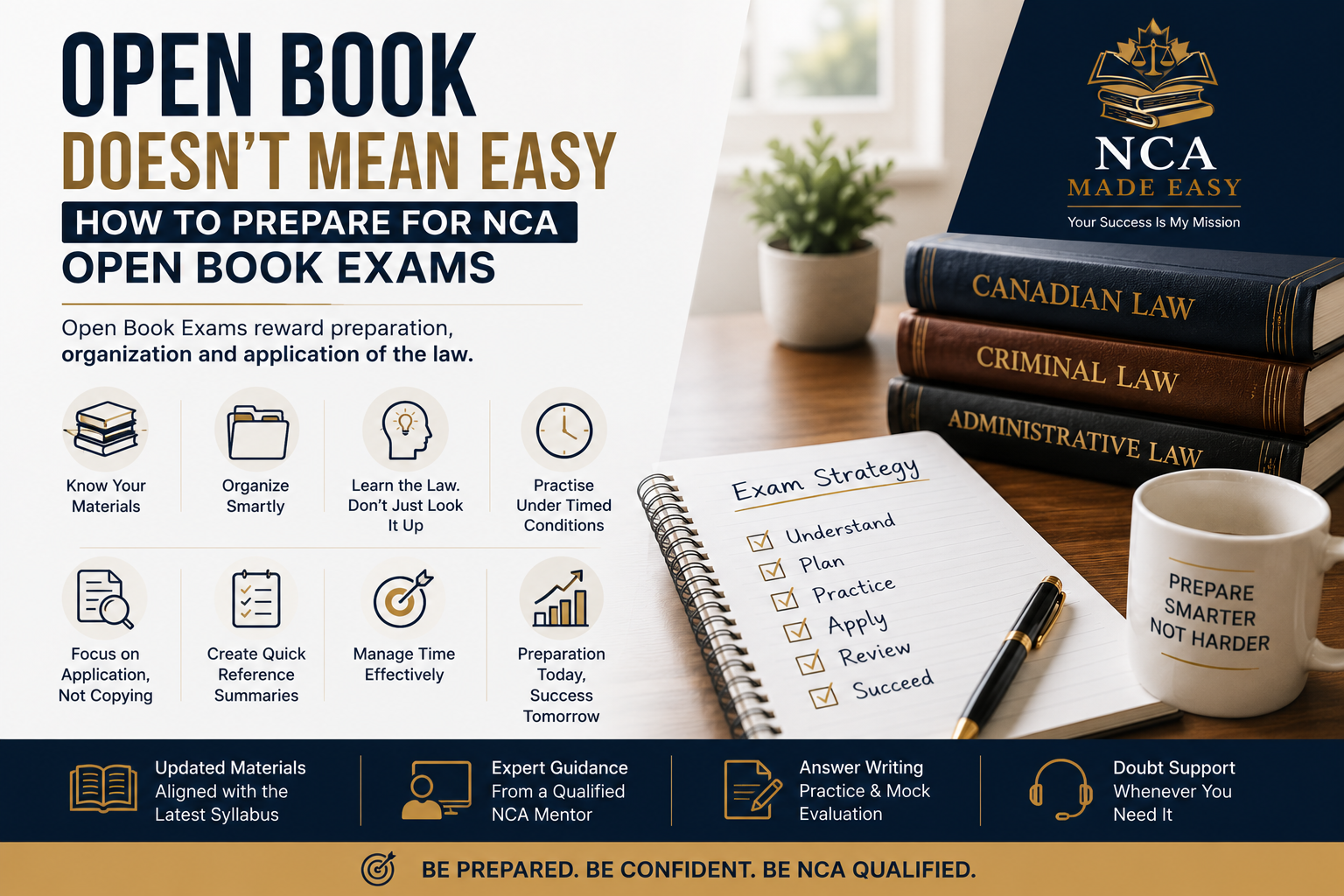
Open-book exams reward preparation, organization, and legal analysis, not the ability to search through hundreds of pages during the exam.
If you’re preparing for an NCA open-book examination, here’s how you can prepare effectively.
⸻
What Does “Open Book” Actually Mean?
An open-book exam allows candidates to refer to approved study materials during the examination.
However, the time limit remains the same.
Every minute spent searching for information is time lost writing your answer.
Successful candidates rarely spend long flipping through notes because they already know:
* where information is located
* which legal principles apply
* which cases support their analysis
Their materials simply help confirm details.
⸻
Mistake #1: Bringing Too Many Materials
Many candidates arrive with:
* multiple textbooks
* hundreds of printed pages
* loose papers
* unnecessary articles
When the exam begins, they spend more time searching than answering.
Instead, bring only the materials you actually know how to use.
Well-organized notes are far more valuable than large quantities of paper.
⸻
Mistake #2: Never Practising With Your Materials
Some students prepare using digital notes but sit the exam using printed materials for the first time.
This creates confusion during the exam.
Before exam day, practise answering questions using exactly the same materials you intend to bring.
You should know where every important topic, legal test, and case can be found.
⸻
Organize Your Notes Before the Exam
Good organization saves valuable time.
Consider using:
* colour-coded tabs
* chapter dividers
* highlighted legal tests
* case indexes
* table of contents
* quick-reference summaries
The easier your notes are to navigate, the faster you’ll answer questions.
⸻
Learn the Law Before Looking It Up
Your materials should support your knowledge—not replace it.
If you need to search for every legal principle, you will almost certainly run out of time.
Instead, aim to remember:
* major legal tests
* leading cases
* statutory frameworks
* common legal principles
Use your notes only to verify details.
⸻
Practise Under Real Exam Conditions
One of the best ways to prepare for an open-book exam is by completing timed practice questions.
During practice:
* use only your printed materials
* avoid internet searches
* write full answers
* follow the actual exam time limit
This helps develop confidence and improves your speed.
⸻
Focus on Application, Not Copying
NCA examiners are looking for your ability to apply Canadian law to the facts.
Simply copying passages from notes or textbooks will not earn high marks.
Strong answers:
* identify the legal issue
* explain the applicable law
* apply the law to the facts
* reach a well-supported conclusion
This is where answer-writing practice becomes essential.
⸻
Create a Quick Reference Guide
Many successful candidates prepare a short summary containing:
* important legal tests
* leading cases
* statutory provisions
* common IRAC headings
* frequently cited principles
Having this available during the exam reduces stress and saves valuable time.
⸻
Time Management Matters More Than Ever
Open-book exams often create a false sense of security.
Candidates believe they have extra time because they can consult their materials.
In reality, searching through notes can quickly consume thirty minutes or more.
A better strategy is:
* read the question carefully
* identify the issues
* outline your answer
* consult your materials only when necessary
* keep writing
⸻
Final Thoughts
An open-book NCA exam is not a test of how many books you bring.
It is a test of:
* preparation
* organization
* legal reasoning
* issue spotting
* effective time management
Candidates who prepare strategically usually spend very little time searching through their notes because they already understand the law.
Your materials should increase your confidence—not slow you down.
With proper preparation, an open-book exam becomes an opportunity to demonstrate legal analysis rather than memory alone.
⸻
How NCA MADE EASY Helps
At NCA MADE EASY, our courses are designed specifically for the way NCA exams are written.
Our preparation includes:
* Updated study materials
* Comprehensive recorded lectures
* Structured notes
* IRAC-based guidance
* Practice questions
* Answer-writing techniques
* Mock exam support
* Personal study plans
Our goal is not simply to help you study more—but to help you prepare more effectively.